
Build a newsletter clients actually want to engage with
+ An easy AI prompt sequence for a newsletter on the OBBB.

Fair warning: This may be the most meta thing you read all week — a newsletter about newsletters, featuring a newsletter. But bear with me, because most firm newsletters are mediocre at best.
Some are downright painful to read.
They regurgitate general market updates. They bury readers in jargon. They read like a Series 7 textbook, instead of a conversation.
A forgettable (or even unreadable) newsletter does nothing for business development. If anything, it’s a drain on precious time and resources.
However, with a few tweaks and some down-to-earth touches, newsletters can be a firestarter.
According to a Dow Jones study, 42% of investors say their advisor could add more value simply by sharing content personalized to their interests, goals, and life events — yet only 4 in 10 advisors are actually doing it.
Long story short: you have an opportunity to differentiate.
Let’s unpack common newsletter mistakes and explore how to turn yours into a low-lift, high-impact connection point.
The 3 Most Common Newsletter Mistakes Advisors Make
Generic Market Recaps
To avoid any misinterpretation, let me set something straight first — sharing your thoughts on market movements is not a waste of time. It demonstrates your expertise and authority on technical subject matter. As an investor, I would want to see that my advisor is on top of things.
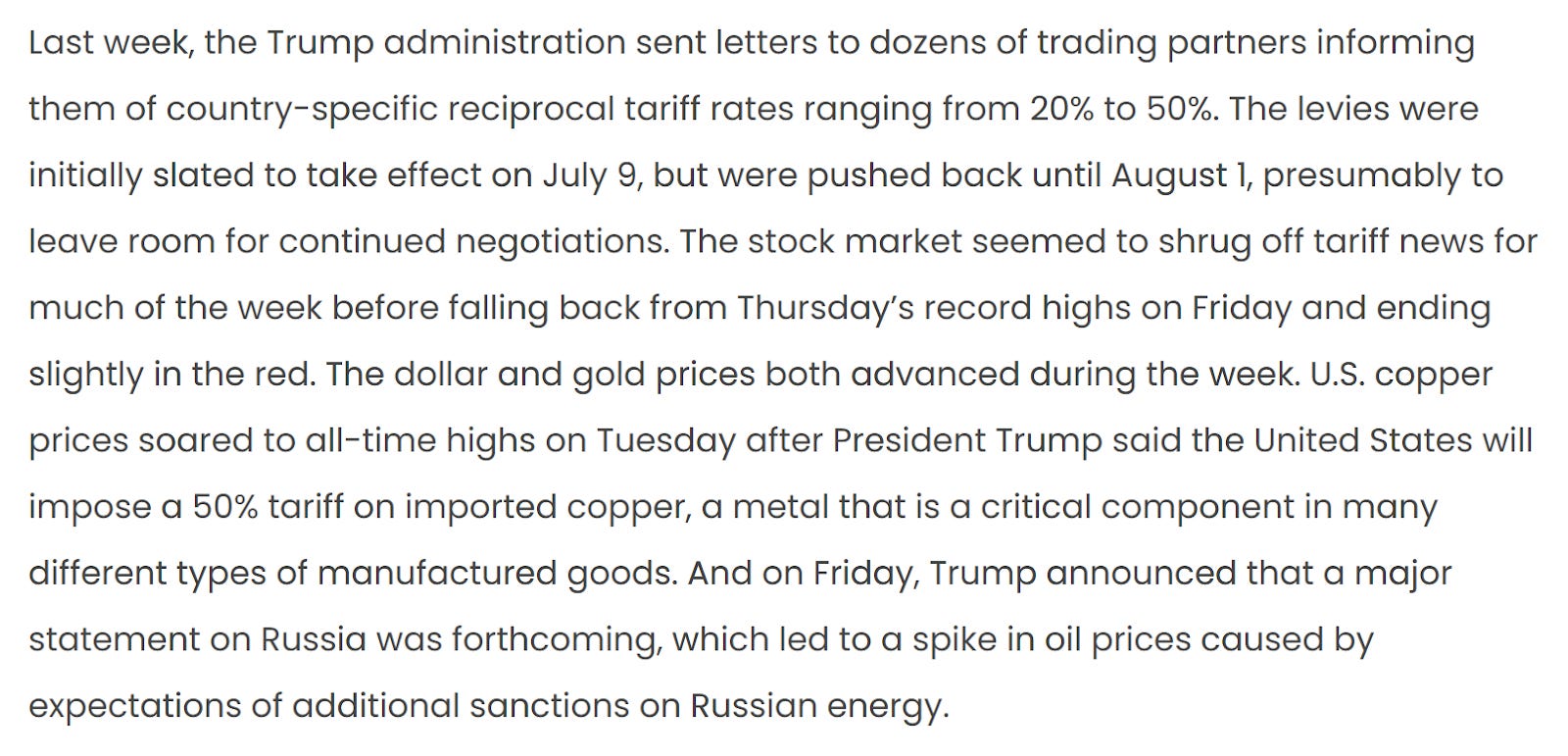
Just reciting what happened though, well, that’s another story. Here’s a prime example:
🥱
While this particular firm’s assessment may be accurate and comprehensive, it fails to take the perspective of the reader into account. In other words, if I’m reading this, I’m asking:
What are the implications for my portfolio?
How does this impact me?
Why should I care?
The Great Wall of Text
Most people (not just advisors) are guilty of paving the Great Wall of Text every time they write. This approach condenses everything someone has to say about a topic into a horse-pill-sized block of text that’s neither easy nor desirable to read.
Here’s a real example:
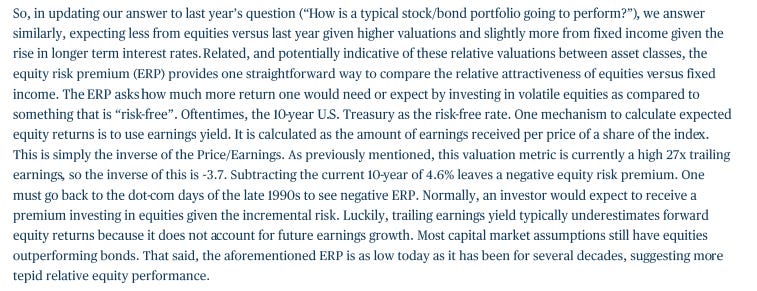
Pop quiz: What was the 10-year Treasury’s rate at the time of this example’s writing?
Answer: Who knows, because no one’s reading that.
Instead of competing to see who can build the tallest, most eye-straining tower, aim for climbable retaining walls with a healthy amount of white space. There’s nothing wrong with two- or even one-line paragraphs.
They stand out and are easier to read.
Impersonal CTAs
In the movie Pulp Fiction, Mia (Uma Thurman) asks Vincent Vega (John Travolta), “When in conversation, do you listen, or do you just wait to talk?”
That line has stuck with me ever since I first saw the classic Tarantino film.
It’s easy to forget that, while you are the one initiating the dialogue, a newsletter is in fact a conversation.
With that in mind, what’s wrong with this visual?
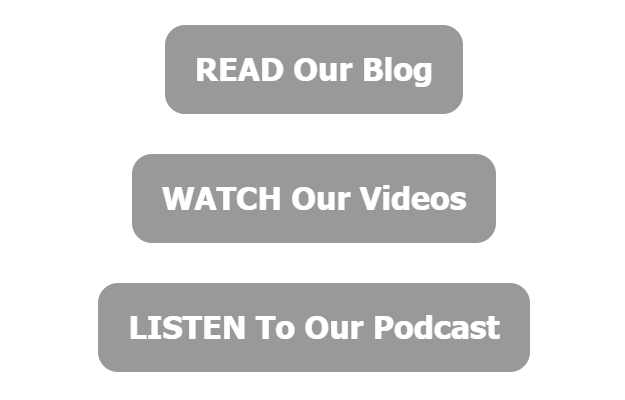
For starters, option overload.
More importantly, they’re firm-focused — read OUR blog, watch OUR videos, you get the idea. The reader just spent a lot of time listening to the firm speak, now they’re pushed to do even more listening.
Instead, why not encourage conversation — like you would in reality — by asking a question?
“Any concerns about the current market’s impact on your own situation?“
“Do you have any questions? We’re a quick email or call away if you do.”
Even a simple, “What’s on your mind?”, can go a long way not only to build trust and engagement but also to proliferate prime content ideas. If a client asks a question about tariffs, you can spotlight the Q&A in a future edition of your newsletter.
Chances are, if one person is wondering something, others are too.
Get People Reading (and Replying)
If most advisor newsletters could be mistaken for textbooks, your goal should be the opposite: make readers feel like they’re reading a personal letter.
Clear. Concise. Human.
And you don’t have to water down your insights to accomplish this.
Start by reframing your newsletter as a conversation starter. Speak to real questions, real concerns, and real goals. Then invite readers to participate — ask what’s on their mind, welcome their feedback, and let them know anything they say will be anonymized.
To help you do so, I’ve created a step-by-step prompt sequence that does the heavy lifting for you. The topic is likely top of mind for many people these days: the One Big Beautiful Bill’s impact on student loans.
And here’s the result.
Until next time,
Carter
Financial Copywriter | Founder of Assets Under Marketing
P.S. Don’t forget to subscribe: